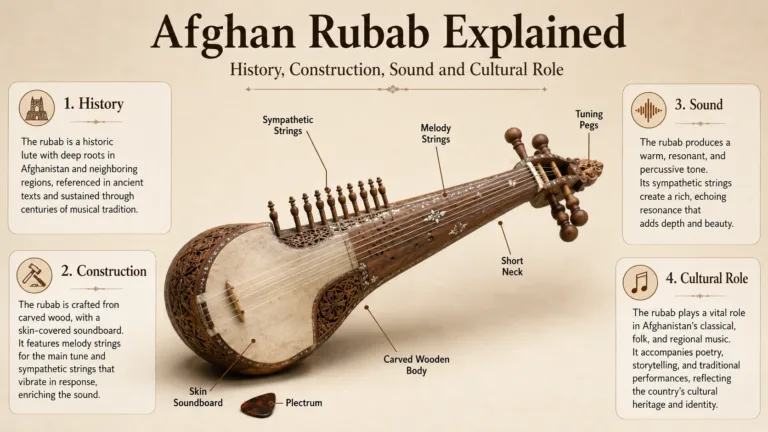
Afghan Rubab Explained: History, Construction, Sound and Cultural Role
The Afghan rubab is a short-necked, plucked lute with a carved wooden body, a skin-covered resonating...
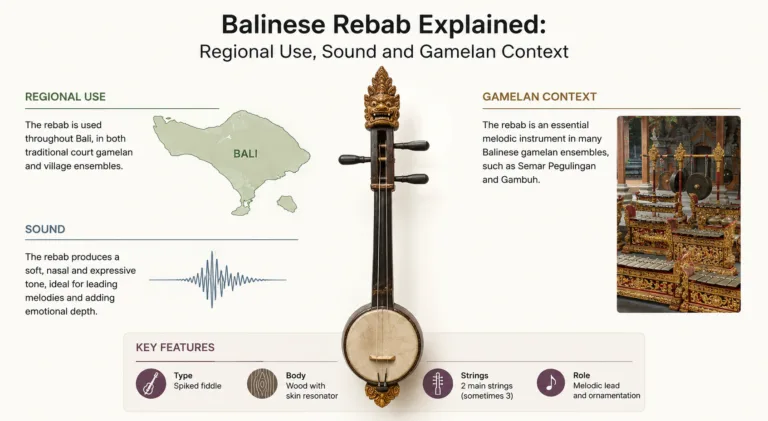
Balinese Rebab Explained: Regional Use, Sound and Gamelan Context
The Balinese rebab is a small two-string bowed lute used inside selected Balinese gamelan ensembles, where...
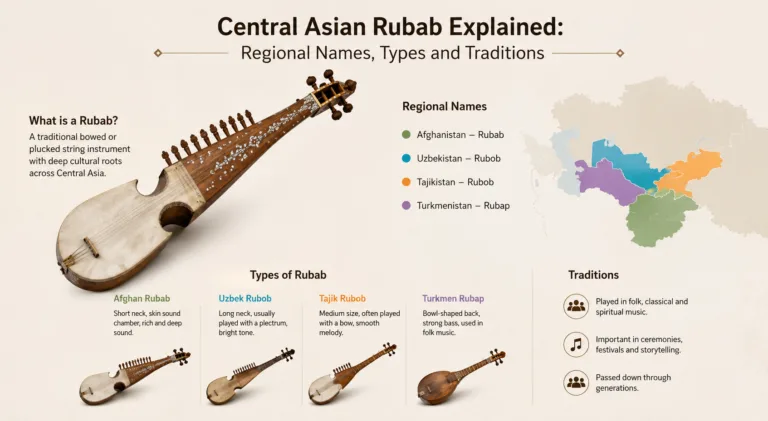
Central Asian Rubab Explained: Regional Names, Types and Traditions
Central Asian rubab is not one single, fixed instrument. The name points to a family of...
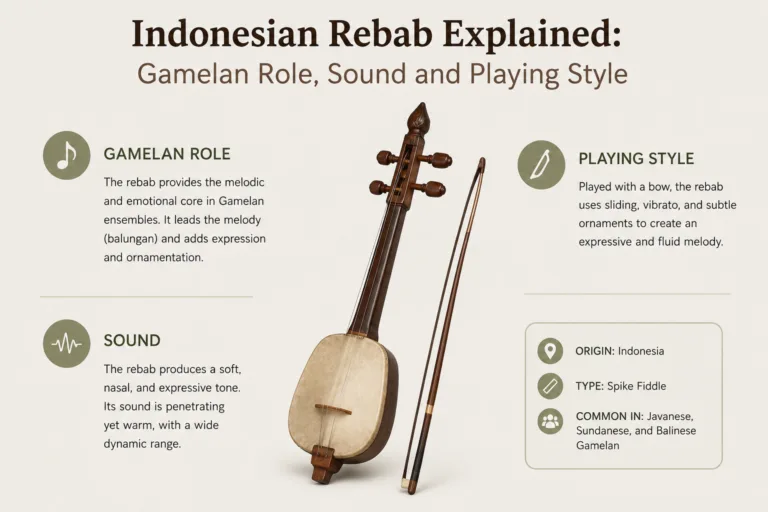
Indonesian Rebab Explained: Gamelan Role, Sound and Playing Style
The Indonesian rebab is best understood as a group of related bowed instruments used in different...
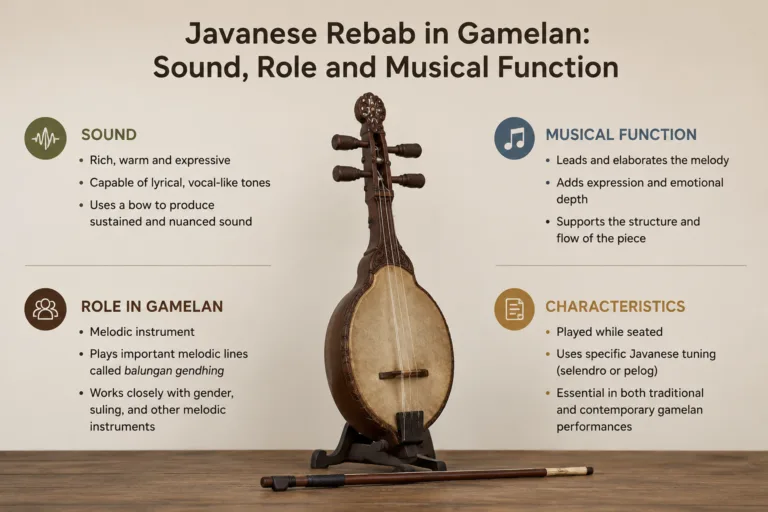
Javanese Rebab in Gamelan: Sound, Role and Musical Function
The Javanese rebab is a two-string bowed lute whose role in Central Javanese gamelan depends as...
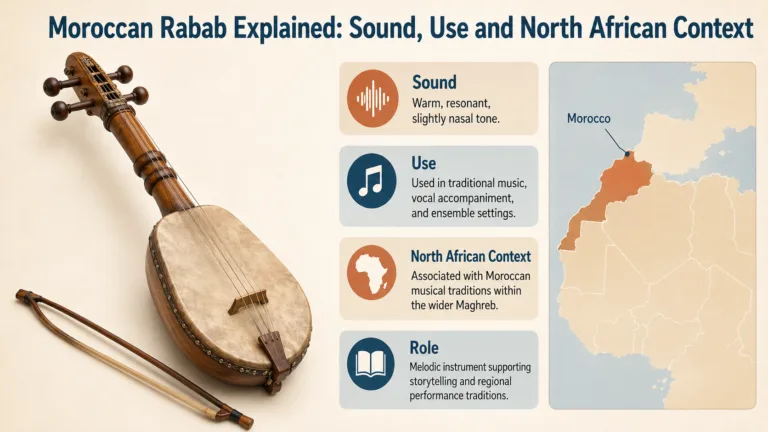
Moroccan Rabab Explained: Sound, Use and North African Context
The Moroccan rabab is best understood as a bowed North African string instrument rather than a...
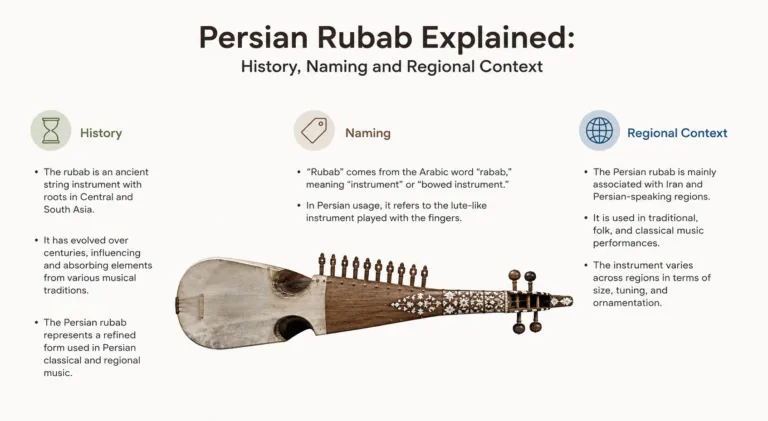
Persian Rubab Explained: History, Naming and Regional Context
A Persian rubab is best understood as a rubab-family instrument seen through Persian-language naming, historical writing,...
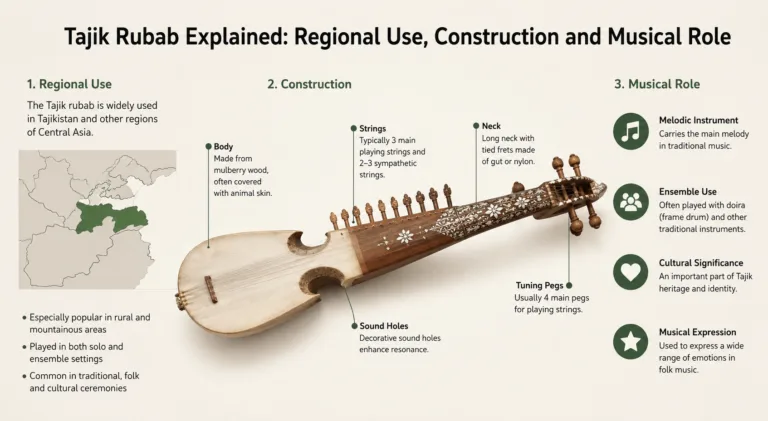
Tajik Rubab Explained: Regional Use, Construction and Musical Role
Tajik rubab usually refers to a plucked lute tradition known locally through spellings such as rubab,...
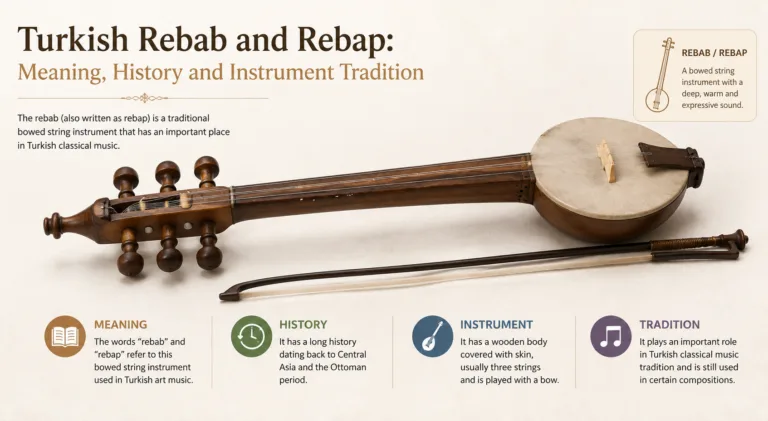
Turkish Rebab and Rebap: Meaning, History and Instrument Tradition
Turkish rebab, often written rebap in modern Turkish, names a bowed string instrument tied to Ottoman...
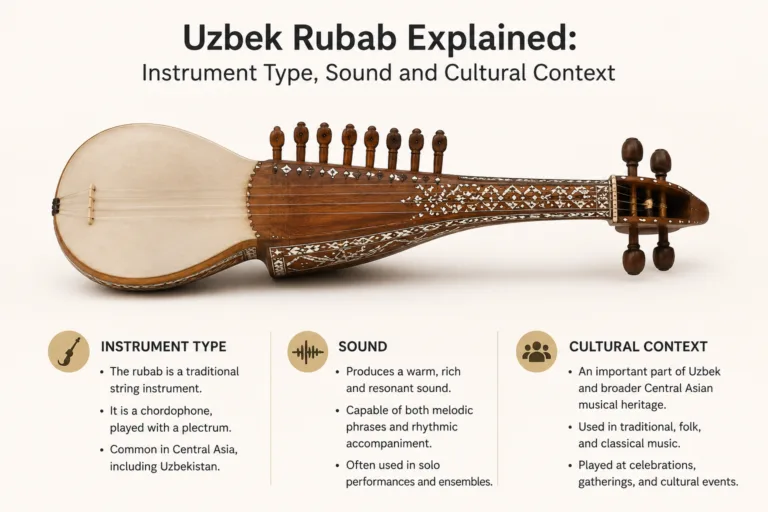
Uzbek Rubab Explained: Instrument Type, Sound and Cultural Context
The Uzbek rubab is best understood as a family of plucked lutes rather than one fixed...
10 articles in Regional Types