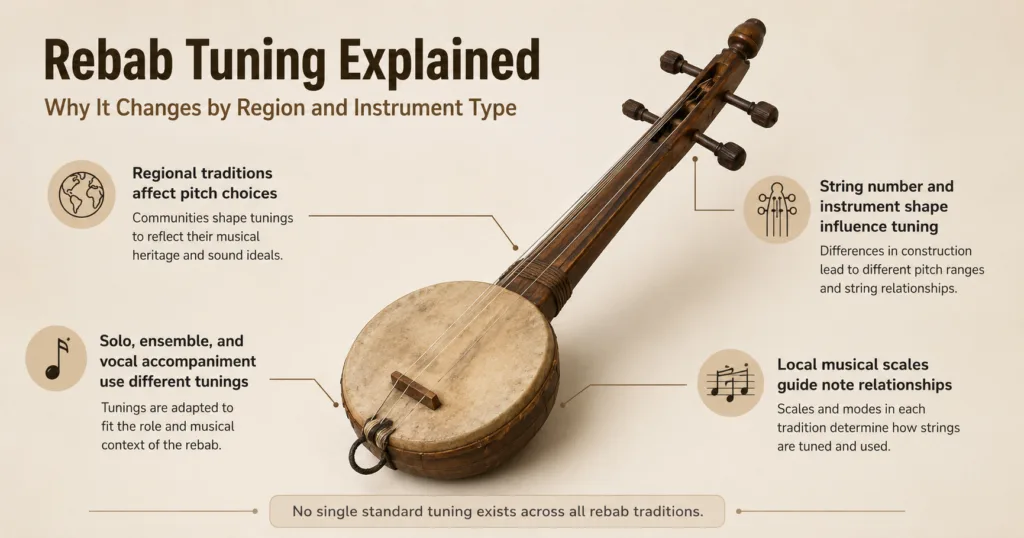
Rebab Tuning Explained: Why It Changes by Region and Instrument Type
Rebab tuning is not one fixed chart. The word rebab, along with spellings such as rabab, rubab, rubāb, rababa, rebap […]
Rebab tuning is not one fixed chart. The word rebab, along with spellings such as rabab, rubab, rubāb, rababa, rebap […]
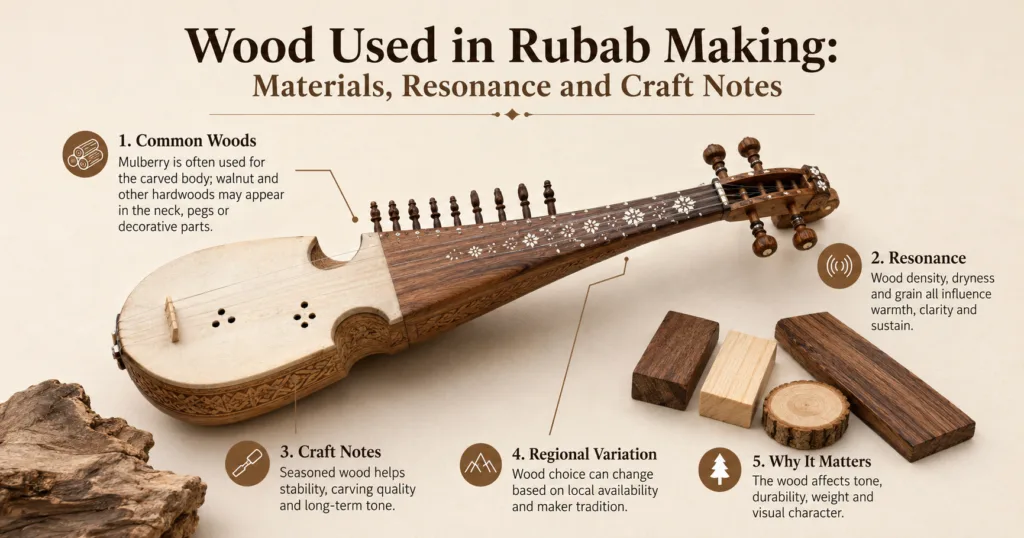
Wood used in rubab making is not only a matter of appearance. It affects weight, carving, neck stability, resonance, repair
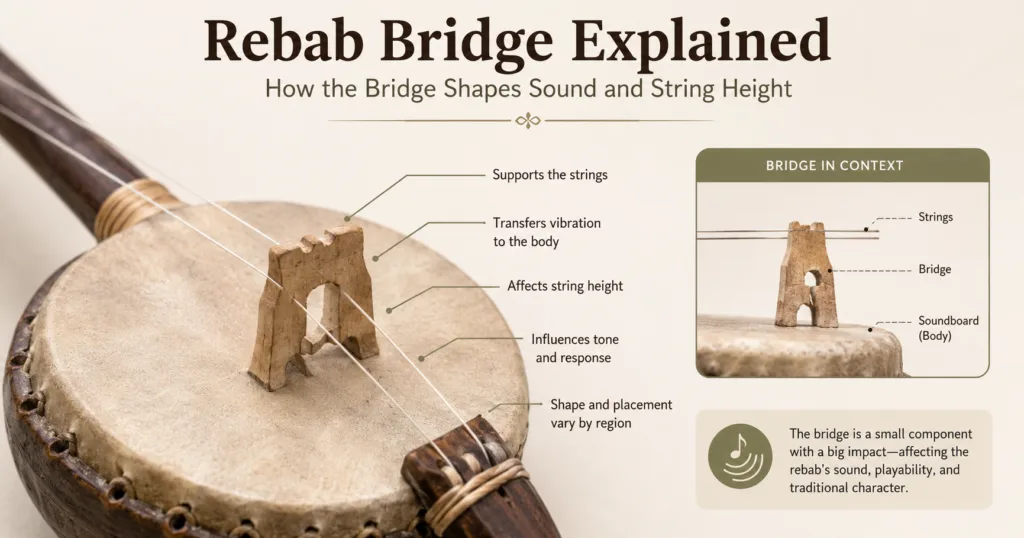
The bridge on a rebab is a small part with a large job. It lifts the strings, spaces them, carries
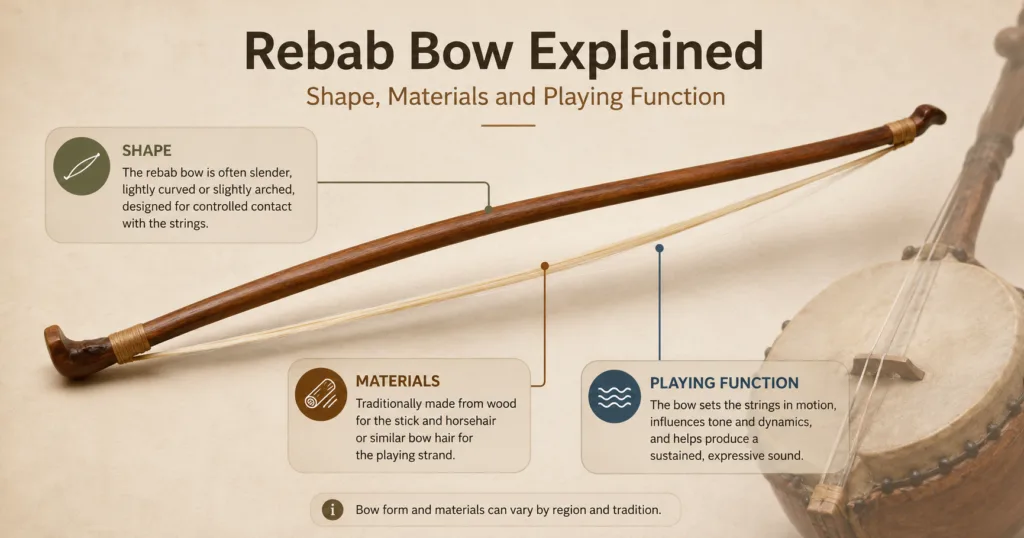
The rebab bow is a small part of the instrument, but it controls much of the sound. On bowed rebab,
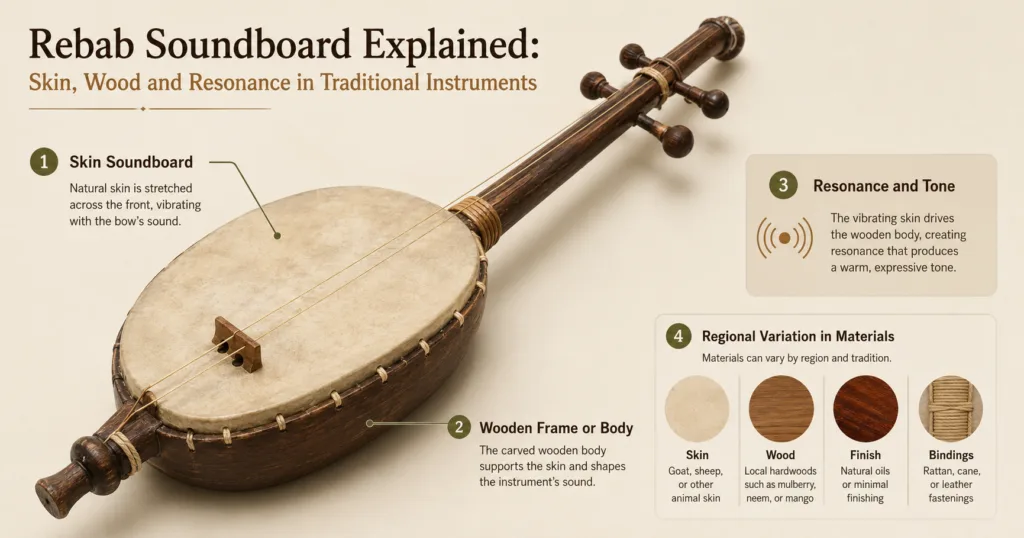
A rebab soundboard is the vibrating surface that turns string movement into audible tone. In many traditional rebab, rabab and
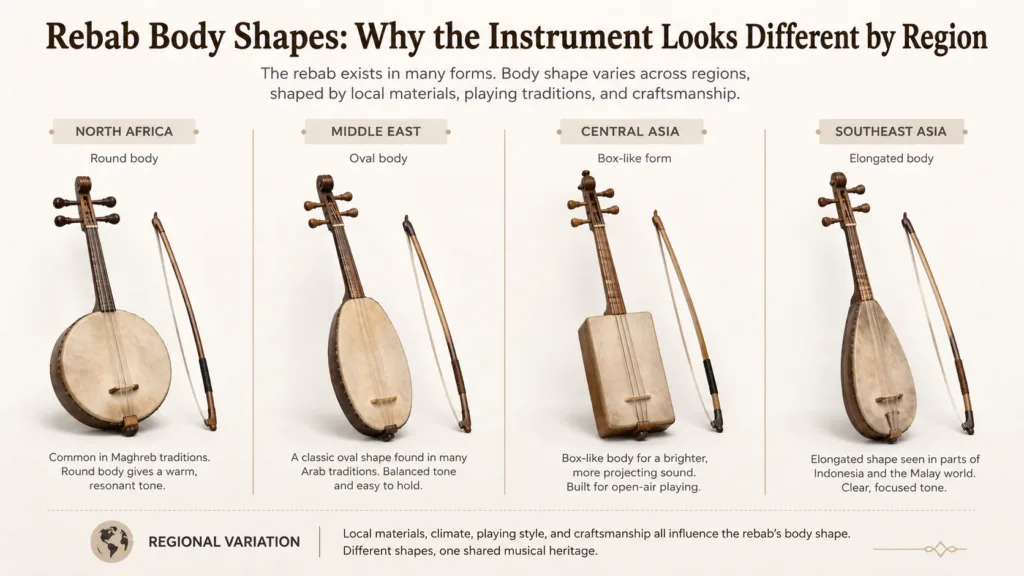
Rebab body shapes vary because the name rebab does not point to one fixed object everywhere. It describes a family
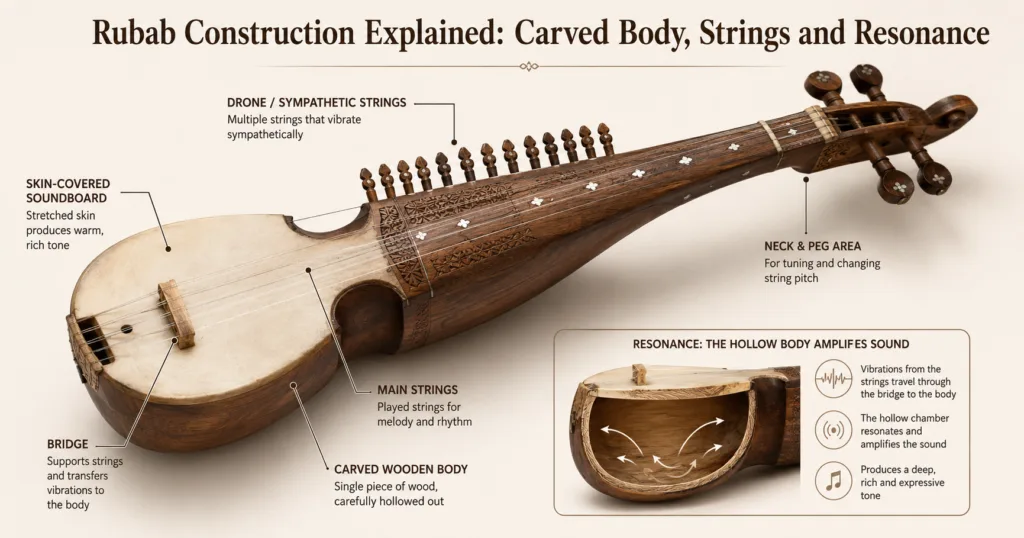
The rubab is built around a simple but demanding idea: a carved wooden body, a skin-covered resonating face, and several
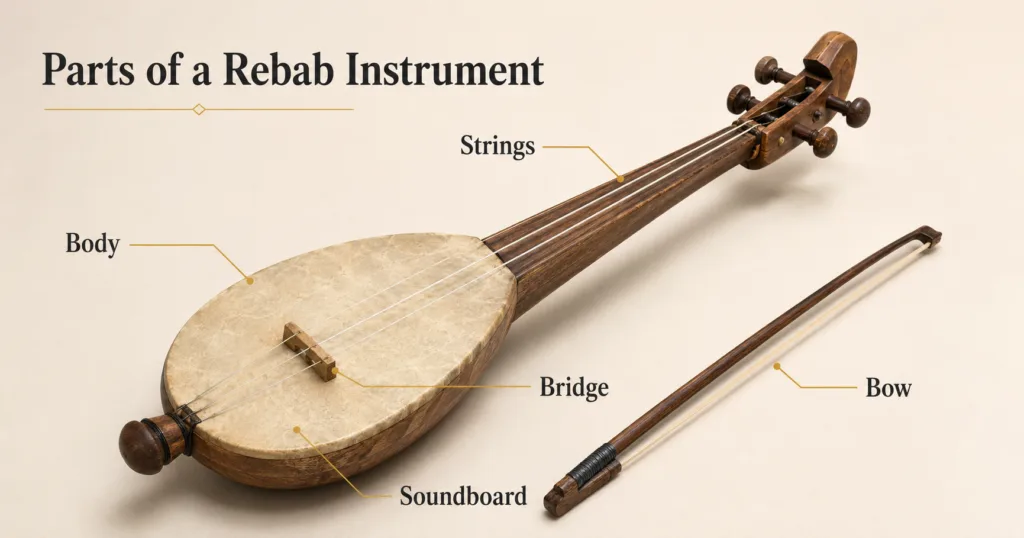
A rebab is best understood through the way its parts share tension: the strings pull across a small bridge, the
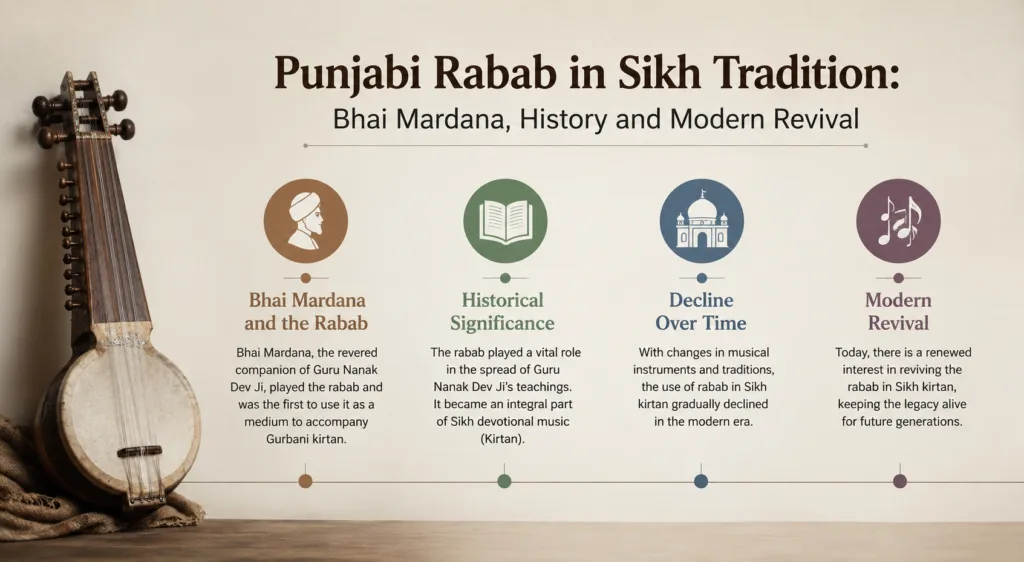
Bhai Mardana’s rabab was not a decorative object beside Guru Nanak. It was a working voice in early Sikh sacred
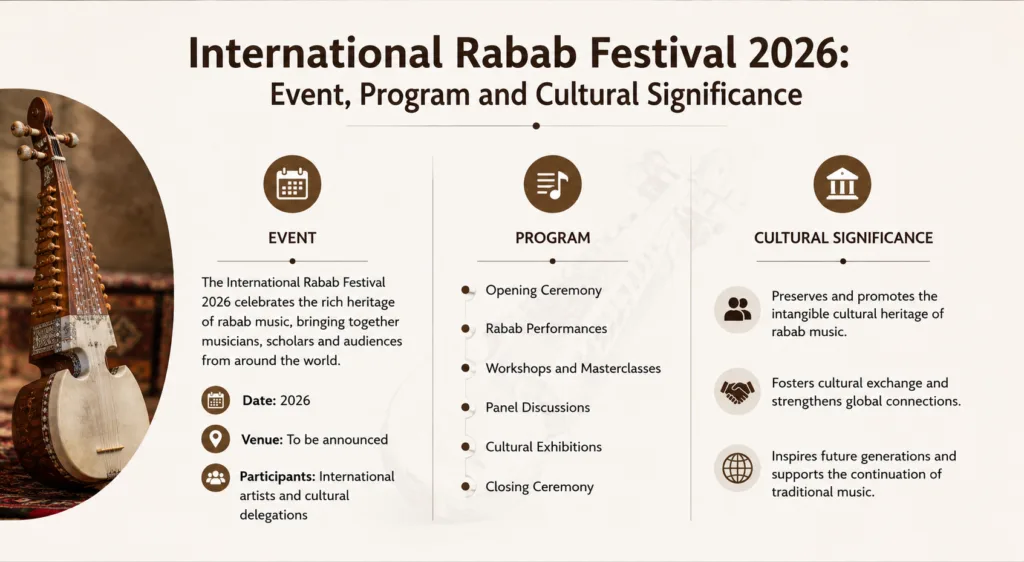
The International Rabab Festival 2026 placed a plucked Afghan rubab at the center of a university program shaped by performance,
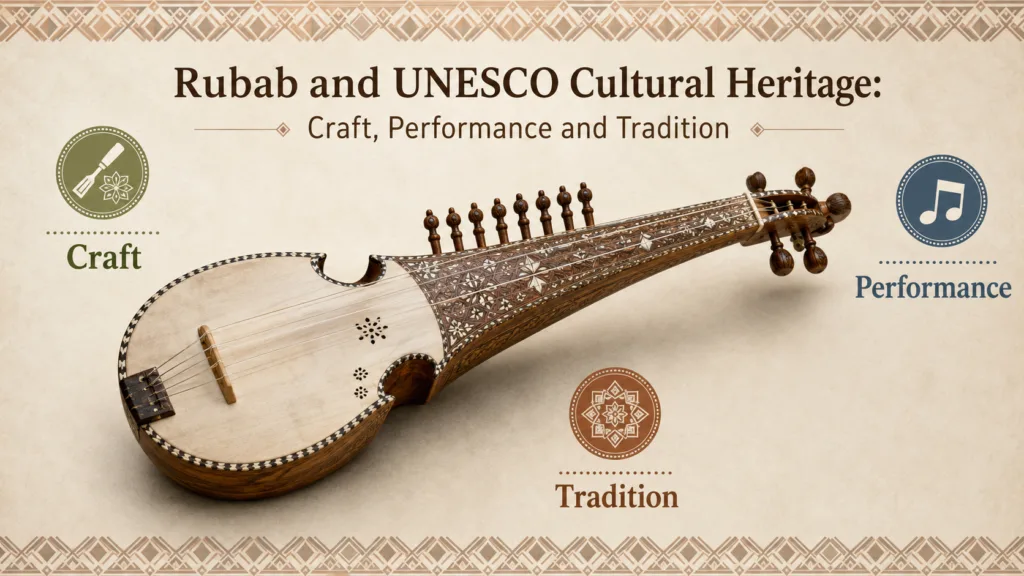
The UNESCO listing for the rubab/rabab protects more than a musical instrument. It recognizes a living chain of craft, performance,
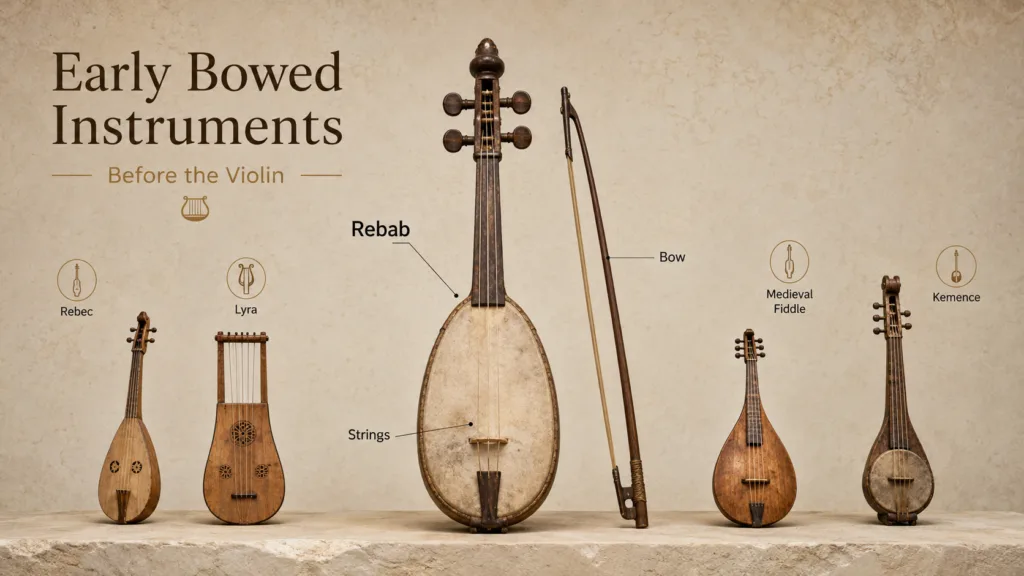
The rebab belongs to the older layer of bowed string instruments that existed before the violin became a settled European

The rebab appears in medieval music less as a single fixed instrument than as a family name moving through languages,
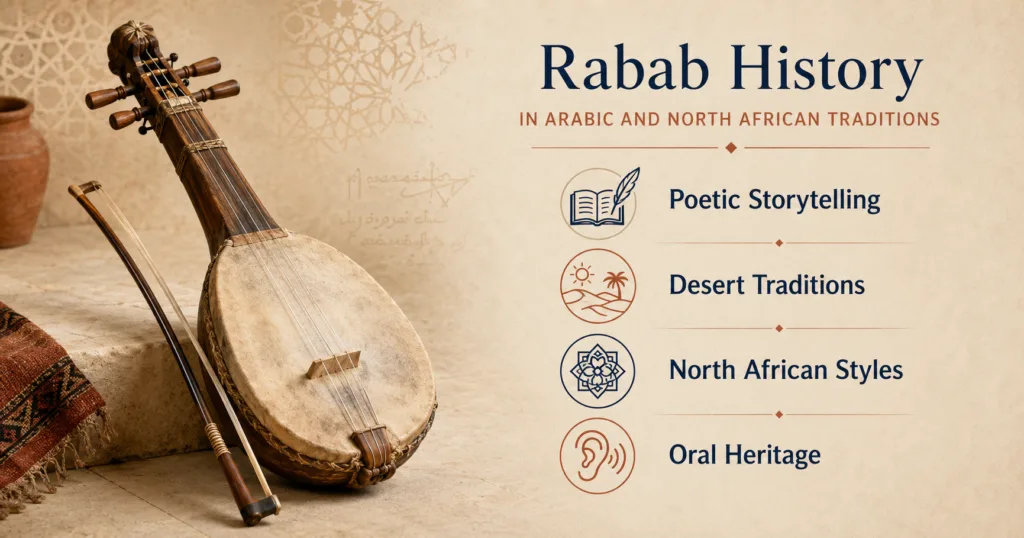
Rabab history in Arabic and North African traditions is not the story of one fixed instrument. The name moved across
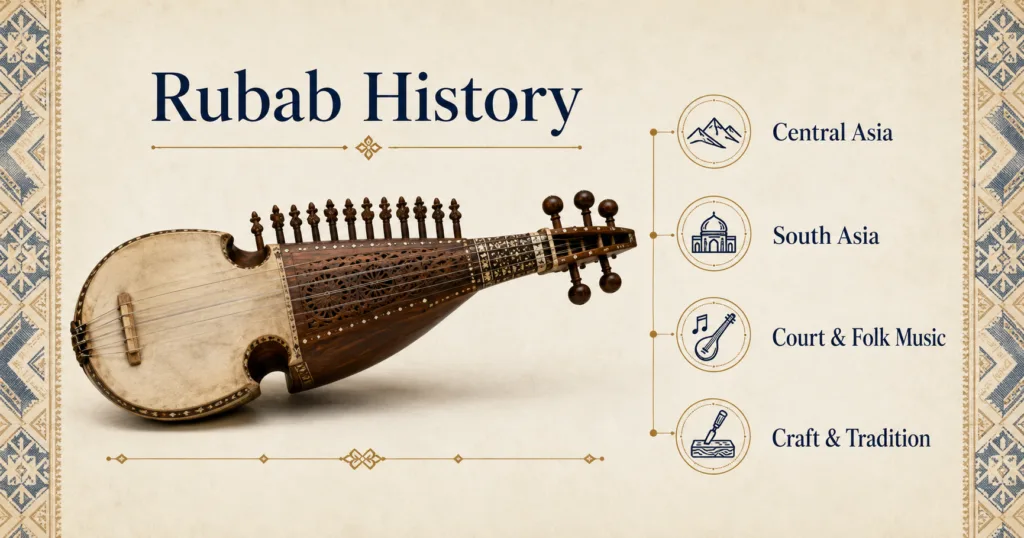
Rubab history is best understood as the history of a name, a family of lutes, and several local craft traditions
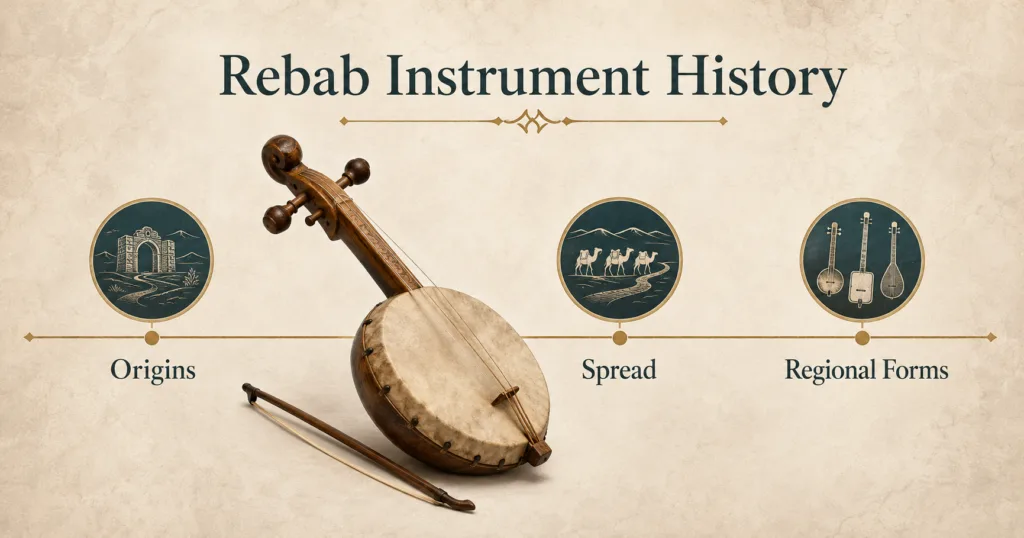
Rebab instrument history is best read as the history of a name that traveled with several related string instruments, not
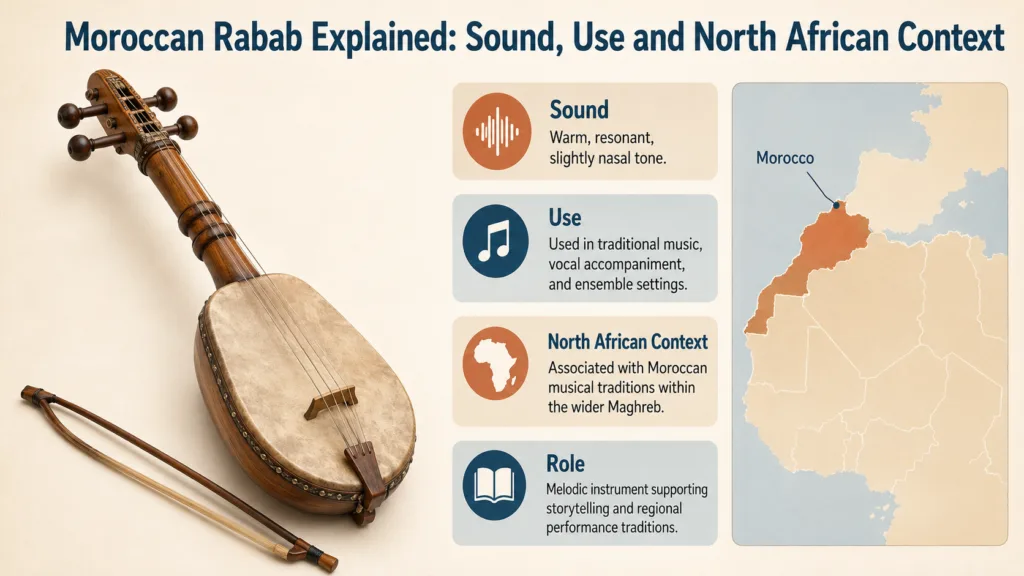
The Moroccan rabab is best understood as a bowed North African string instrument rather than a single fixed design. In
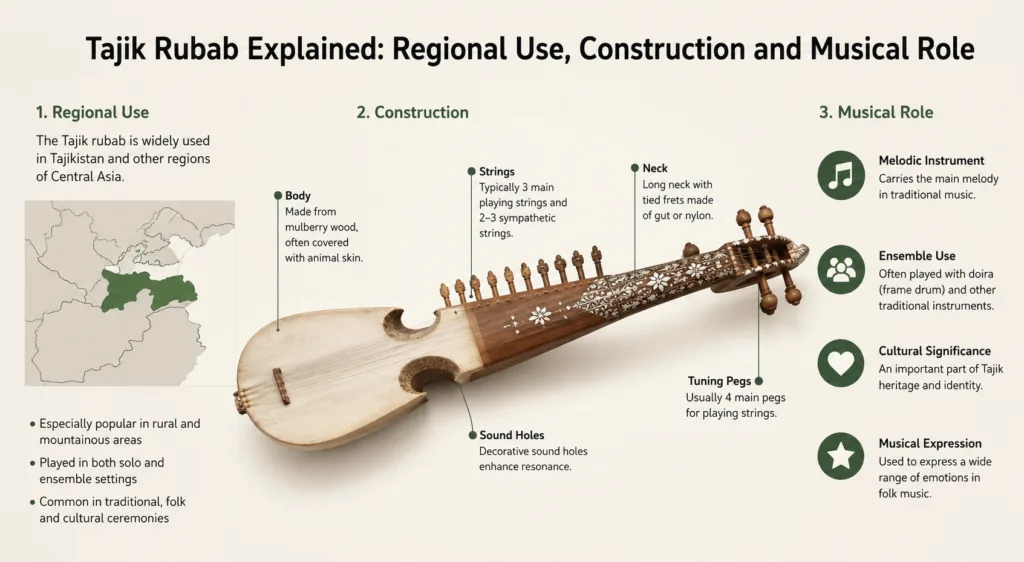
Tajik rubab usually refers to a plucked lute tradition known locally through spellings such as rubab, rubob, rubāb and, in
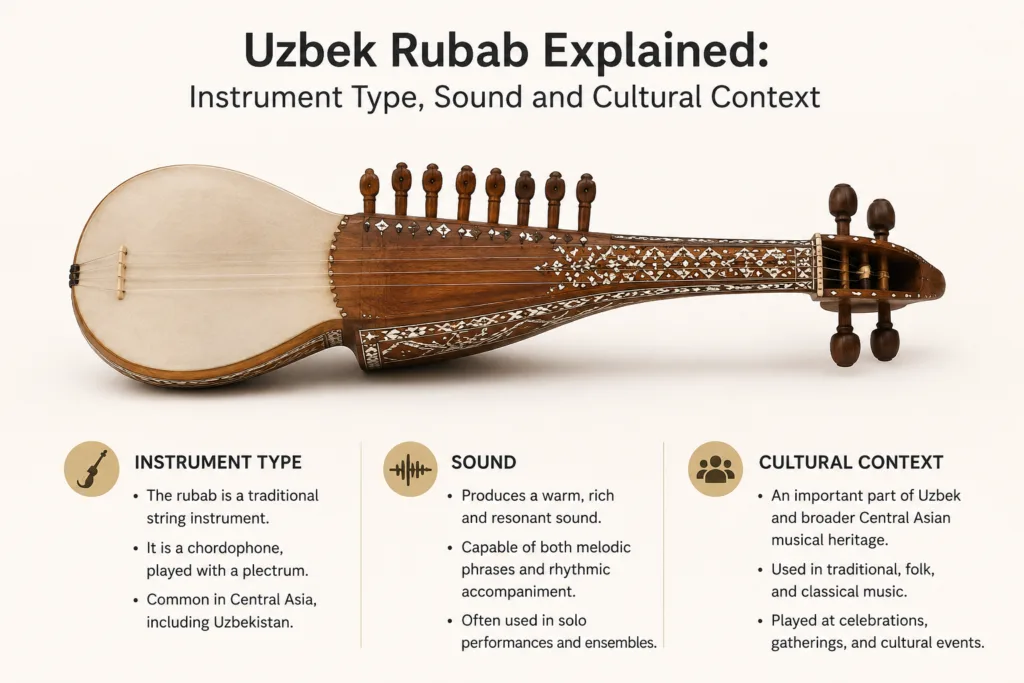
The Uzbek rubab is best understood as a family of plucked lutes rather than one fixed instrument. In Uzbekistan it
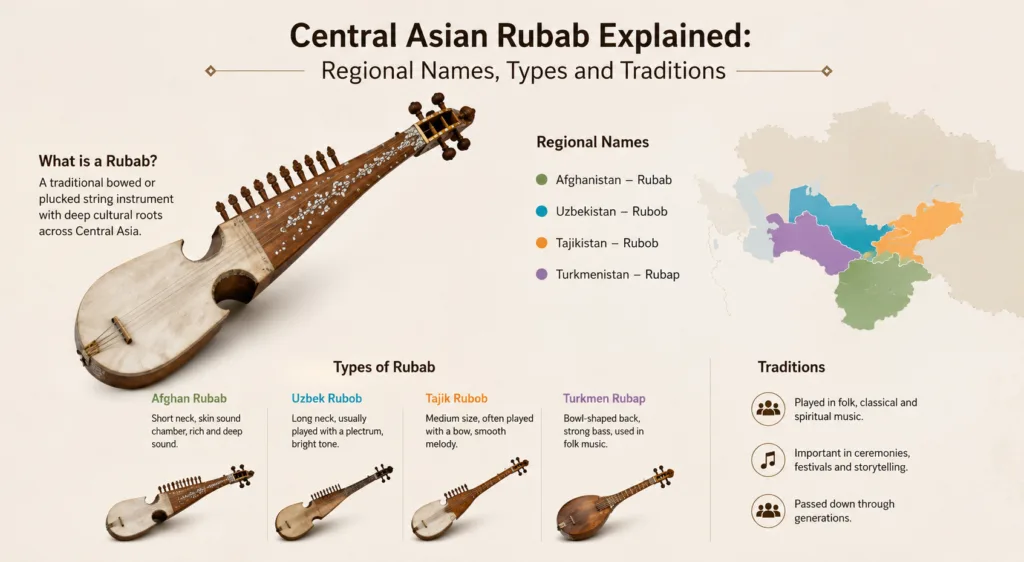
Central Asian rubab is not one single, fixed instrument. The name points to a family of plucked lutes whose forms
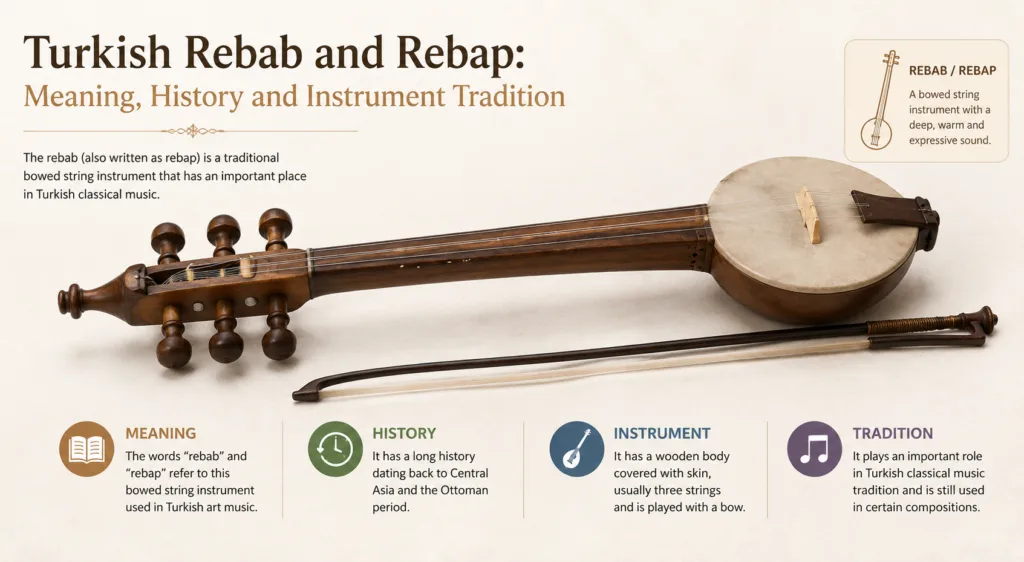
Turkish rebab, often written rebap in modern Turkish, names a bowed string instrument tied to Ottoman music, Mevlevi musical practice,