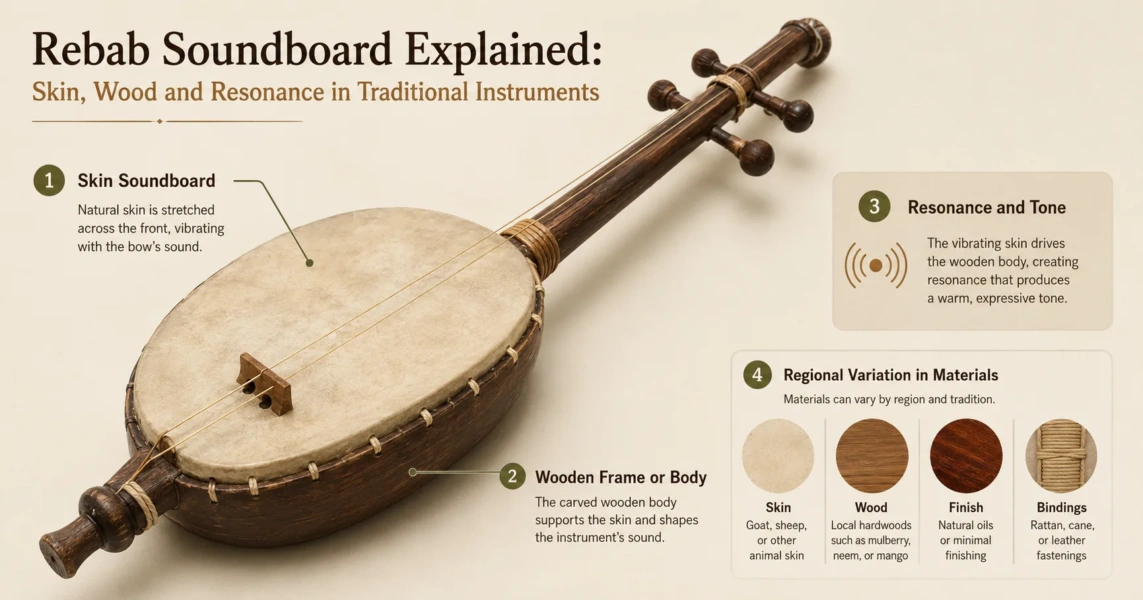
A rebab soundboard is the vibrating surface that turns string movement into audible tone. In many traditional rebab, rabab and rubab instruments, this surface is not a flat wooden plate but a stretched skin membrane. In other regional or related forms, wood plays a larger role. The difference matters: skin, wood, bridge pressure, body shape and air space all change how the instrument speaks.
What the Soundboard Does
The soundboard sits between the strings and the resonating body. When a bow, finger or plectrum sets a string in motion, the bridge carries that vibration into the soundboard. The soundboard then moves a larger area of air than the string could move by itself.
That is why the same string can sound thin when held in the air, but fuller when connected to a resonator. The soundboard does not simply make the sound louder. It shapes the attack, decay, brightness, warmth and carrying quality of the instrument.
Luthier’s Note: On a rebab-type instrument, the soundboard should not be judged only by material. A thin, well-fitted skin can respond better than a thick, poorly fitted one. A wooden top also depends on thickness, grain, bracing, bridge pressure and the size of the body beneath it.
Skin and Wood in Rebab-Type Instruments
The word rebab covers several regional instruments rather than one fixed factory design. Some are bowed spike fiddles with a skin-covered resonator. Some are plucked lutes with a carved wooden body and a skin-covered table. Others sit near related bowed or plucked traditions where wood soundboards are more common.
| Soundboard Type | Where It Commonly Appears | Typical Sound Behavior | Main Care Concern |
|---|---|---|---|
| Stretched skin | Many bowed rabab, rebab and rababa forms; Afghan rubab-type instruments also often use a skin-covered table | Fast response, direct attack, clear nasal or dry tone depending on body and strings | Humidity, uneven tension, cracking or loosening |
| Wooden top | Some related lute and fiddle traditions; certain regional instruments connected by name, form or history | More controlled sustain, stronger grain influence, often a rounder response | Cracks, warping, bridge pressure and old repairs |
| Mixed body construction | Carved wooden bodies with partial skin tables, or wooden frames carrying a skin membrane | Blends the quick membrane response with the mass and air space of the wooden body | Joint movement, skin shrinkage and changes in top tension |
This variety explains why two instruments called rebab may not sound alike. The name can point to a family resemblance, a playing tradition or a historical relationship, but construction still needs to be examined on the actual instrument.
Skin Soundboards
A skin soundboard is made by stretching prepared animal skin over the open face of a resonator. In many documented examples, goat or sheep skin is used, though exact materials vary by region and maker. The skin is usually thinned, cleaned, wetted, stretched and allowed to dry under tension.
As it dries, the skin becomes taut. That tension is part of the sound. A tighter membrane can give a quicker, brighter response, while a looser or thicker membrane may sound darker, softer or less immediate. These effects are not fixed rules, because the bridge, strings, body and playing method also matter.
Why Skin Gives a Direct Voice
Skin behaves like a membrane. It can respond quickly to small movements from the bridge, which helps explain the direct, speaking quality heard in many rebab and rabab instruments. The attack can feel close to the bow or plectrum. Notes may bloom quickly and fade without the long sustain associated with many larger wooden lutes.
This is one reason skin-topped instruments often work well in intimate performance settings. They can carry a focused melodic line without needing a large body.
How Thickness Changes Response
Skin thickness affects stiffness and movement. A very thin membrane may respond easily but can be fragile. A thicker one may resist movement and produce a firmer, less open tone. Makers choose by touch and experience rather than by one universal measurement.
Evenness matters. A skin that is thick in one area and thin in another may pull unevenly as it dries. That can create wrinkles, weak spots or an unstable bridge surface.
Wooden Soundboards
Wooden soundboards appear more often in lute, fiddle and rebec-related construction than in the skin-fronted rabab forms most readers picture first. Still, wood belongs in this discussion because regional naming and instrument development are not tidy. Some instruments linked to the rebab family use wood for the body, the top, the frame or the area around a skin table.
A wooden top works differently from a skin membrane. It has grain, stiffness across and along the fibers, thickness, arching or flatness, and sometimes internal support. These details shape how freely the top moves.
How Wood Shapes Resonance
Wood can support a more stable top surface and may offer a more sustained response than skin. The tone may feel less dry, especially when the body is larger and the bridge is designed for longer vibration. That said, wood does not automatically mean a louder or better instrument.
The wood must suit the design. A heavy top can choke the sound. A top that is too thin can deform under bridge pressure. Makers often balance strength against movement, using experience rather than a single formula.
Wood Species and Local Craft
Traditional makers often use woods available in their region. Mulberry is strongly associated with some rubab-type instruments. Other regional forms may use walnut, apricot, maple-like local woods or other suitable timbers, depending on craft practice and supply.
The exact species is only part of the story. Seasoning, carving, thickness, body depth and the fit between top and body can matter as much as the name of the wood.
Material Note: A collector should be careful with simple labels such as “skin rebab” or “wood rebab.” Many instruments combine a wooden body with a skin soundboard. Others use a wooden resonator shell with a membrane stretched across only one opening.
Bridge Pressure and the Soundboard
The bridge is the small part that transfers string energy into the soundboard. On many skin-topped rebab instruments, the bridge stands directly on the membrane. Its weight, height, foot shape and placement can change the sound more than a beginner might expect.
A bridge that presses too heavily can mute the top. A bridge that is too light or poorly seated can buzz, slide or fail to transfer energy well. On a skin table, the bridge also interacts with membrane tension. If humidity loosens the skin, the bridge may sink slightly and the instrument may lose clarity.
Bridge Placement
Traditional placement is usually learned from the instrument’s regional design, not from a universal rule. A small change in position can alter balance between brightness and body resonance. On older instruments, bridge marks or slight discoloration may show where the bridge has sat for years.
Moving the bridge without understanding the instrument can affect intonation, string angle and top pressure. Careful adjustment belongs to someone familiar with that instrument type.
Body Shape and Air Resonance
The soundboard does not work alone. It moves with the air inside the body. Bowl-shaped resonators, box forms, carved lute bodies and narrow spike-fiddle bodies all create different air spaces.
A small body may give a focused, close tone. A deeper body may support a stronger low response if the soundboard and bridge allow it. A carved wooden body with a skin table can create a firm center to the sound: the membrane speaks quickly, while the body gives shape and color.
- Small resonator: often clear, direct and quick to respond.
- Deeper body: may add body and lower color, depending on construction.
- Thin skin: can speak easily but needs careful handling.
- Stiffer top: may offer control but can reduce openness if overbuilt.
How Skin Reacts to Climate
Skin soundboards are sensitive to air moisture. In damp conditions, the membrane can relax. The tone may become softer, lower in tension or less clear. In dry conditions, the skin can tighten, sometimes giving a brighter response but also raising the risk of stress or cracking.
This behavior is normal for membrane-topped instruments. It does not mean the instrument is poorly made. It means the material is alive to its surroundings.
Care for a Skin Soundboard
Skin should be protected from direct heat, strong sun and fast moisture changes. A damp cloth should not be used on the membrane. If dust needs to be removed, a dry, soft brush is safer than rubbing.
Old skin may show darkening, small wrinkles or repaired edges. Those signs need context. A replaced skin can be a normal repair, especially on an instrument that has been played for many years.
Collector’s Note: On older rebab and rabab instruments, the condition of the soundboard should be judged with the bridge, body and string setup. A beautiful body with a loose or cracked membrane may not play well until the top is repaired by someone who understands the regional form.
How Wood Reacts Over Time
Wooden soundboards can also change. They may develop cracks, sink under bridge pressure or open at seams. A stable old crack is different from an active split that moves when the instrument is tuned. Repairs should respect the original construction rather than simply making the surface look clean.
Wood can be more stable than skin in everyday humidity changes, but it is not immune to climate. Dry storage can open cracks. Excess moisture can soften glue joints or distort thin parts.
Skin Soundboard and Wood Soundboard Compared
The difference between skin and wood is best understood as a set of tendencies, not a ranking. Traditional makers choose materials because they fit a local sound ideal, playing technique and body design.
| Feature | Skin Soundboard | Wood Soundboard |
|---|---|---|
| Response | Often quick and immediate | Often more gradual, depending on thickness and body design |
| Sustain | Usually shorter and drier | May allow longer sustain |
| Climate behavior | Highly sensitive to humidity and dryness | More stable in some settings, but still affected by climate |
| Repair concerns | Membrane replacement, edge tension, cracks, looseness | Cracks, warping, glue joints, bridge pressure marks |
| Common association | Many rabab, rebab, rababa and rubab forms | Related lute and fiddle traditions; some regional variants and relatives |
Soundboard Differences Across Regional Forms
Regional names can hide construction differences. A Bedouin rababa, a Javanese rebab and an Afghan rubab do not share one identical body plan. Their soundboards may all involve skin, but the body shape, bridge, stringing and playing method are different.
Bowed Rebab and Rababa Forms
Many bowed forms use a small resonating body with a skin face. The bow produces continuous energy, and the membrane helps the note speak with a clear, direct edge. These instruments often carry melody rather than chordal accompaniment.
Afghan Rubab-Type Construction
The Afghan rubab is usually discussed as a plucked instrument, not a bowed one. It is commonly associated with a carved wooden body and a skin-covered sound table. The result is different from a small bowed rebab: the plucked attack, sympathetic strings in many examples and body mass all shape the resonance.
Related Wooden-Top Instruments
Some bowed and plucked instruments connected historically or linguistically to rebab traditions use more wood in the top or body. These should not be forced into one soundboard category. The safest approach is to identify the exact regional instrument first, then describe the top material.
Listening for the Soundboard
The soundboard can be heard in the first moment of the note. A skin top often gives a compact attack: the note appears quickly, with a dry center and a textured edge. A wooden top may give a smoother rise and a longer tail, depending on the instrument.
Good listening also separates the soundboard from the player’s technique. Bow pressure, plectrum angle, string age and tuning can change the tone. The top is only one part of the chain.
- Attack: how quickly the note starts.
- Decay: how fast the sound fades after the string is released or the bow stops.
- Color: whether the tone feels dry, nasal, warm, bright or rounded.
- Projection: how well the sound carries in a room.
- Stability: whether the tone changes with weather or tuning pressure.
Common Misunderstandings
Skin Does Not Mean Simple Construction
A skin soundboard may look plain, but fitting it well takes skill. The maker must control thickness, tension, edge attachment and bridge support. A small error can change the sound or shorten the life of the membrane.
Wood Does Not Mean Modern Construction
Wooden tops are not automatically modern, and skin tops are not automatically older. Instrument families developed in many places with different materials. Local craft, climate, musical use and available resources all play a role.
One Rebab Sound Does Not Represent Every Rebab
The rebab name covers bowed and plucked instruments across several traditions. A soundboard description should always stay tied to the exact form being discussed.
What to Check on an Existing Instrument
When examining a rebab, rabab or rubab, the soundboard offers useful clues about age, repair and playability. The goal is not to make the surface look perfect. The goal is to understand whether it can still work as a vibrating top.
- Check whether the top is skin, wood or a mixed construction.
- Look at the bridge feet and the area beneath them.
- Notice wrinkles, sinking, cracks or loose edges.
- Check whether the top changes shape under string tension.
- Listen for buzzing, choking or sudden loss of tone.
- Compare the sound with the instrument’s regional type rather than with unrelated lutes or violins.
A playable old instrument may show marks from use. Clean surfaces are not always better than honest wear. For museum or collection work, the soundboard should be read together with the body, strings, fittings and any visible repairs.
FAQ
What is the soundboard on a rebab?
The soundboard is the vibrating top surface that receives string movement through the bridge. On many rebab and rabab instruments, it is made from stretched skin. On some related forms, wood or mixed construction may be used.
Do all rebab instruments have a skin soundboard?
No. Many well-known rebab, rabab and rubab forms use skin, but the name covers several regional instruments. Some related instruments use more wood in the top or body. The exact form should be identified before making a material claim.
Why does a skin soundboard change with humidity?
Skin absorbs and releases moisture from the air. Damp conditions can loosen the membrane, while dry conditions can tighten it. These changes can affect tone, bridge height and response.
Is a wooden soundboard better than skin?
Neither material is simply better. Skin often gives a quick, direct response. Wood may offer a different kind of sustain and stability. The best choice depends on the regional instrument, body shape, strings and playing style.
Can a damaged rebab soundboard be repaired?
Often, yes. Skin membranes can sometimes be replaced, and wooden tops can sometimes be repaired. The repair should match the instrument’s construction and regional type. A general repair approach may harm the sound or reduce historical value.
What sound does a skin-topped rebab usually have?
Many skin-topped examples have a direct attack, focused tone and shorter decay than larger wooden-top lutes. The exact sound still depends on the bridge, body shape, string material, bowing or plucking method and the condition of the membrane.